America’s Universities Are Still Shutting Out Conservative Faculty
Campuses are ideologically imbalanced, hostile to dissent, and unwilling to reform. Secretary McMahon’s call for accountability is much needed.
Originally published in Minding the Campus, August 11, 2026
U.S. Secretary of Education Linda McMahon has issued a call to action that higher education can no longer ignore: universities must restore viewpoint diversity in faculty hiring. Her request isn’t about promoting one ideology over another. It’s about preserving the university’s core mission as a truth-seeking institution and rebuilding public trust in a sector that has badly eroded it.
The ideological imbalance in American higher education is now so extreme that it would be laughable if it weren’t so damaging. At Harvard University, a 2023 Crimson survey found that 32 percent of faculty identify as “very liberal,” while just three percent place themselves anywhere right of center.
That is not a marketplace of ideas. It is a monoculture.
The pattern repeats nationwide. A major study published in March by the University of Wisconsin–Madison’s Tommy G. Thompson Center on Public Leadership found that seven in 10 faculty identify as liberal, while fewer than one in 10 identify as conservative. Even more troubling, the same study found that significant numbers of faculty openly admitted they would be less likely to hire a job candidate who expressed conservative views on issues such as immigration or affirmative action.
Because the survey used randomized assignments, this bias cannot be dismissed as general discomfort with political expression. It is targeted ideological discrimination.
This is not what a college or university is supposed to be.
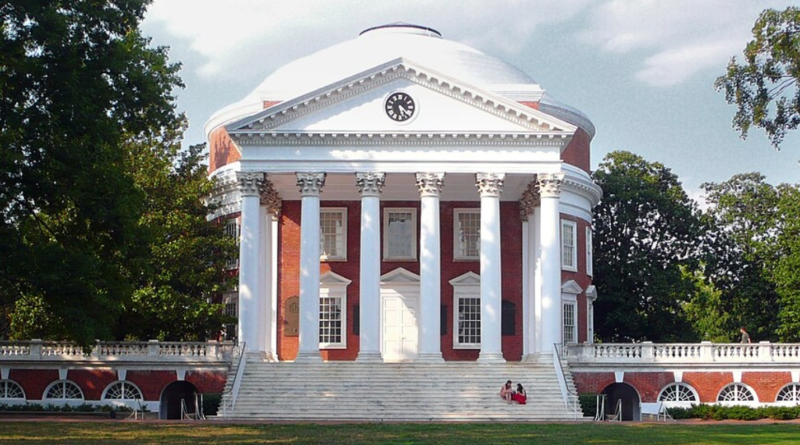
To mention one more example, my alma mater, the University of Virginia (UVA), has repeatedly stonewalled efforts to incorporate viewpoint diversity into its strategic planning and governance. UVA spent more than $20 million per year on “diversity, equity, and inclusion” (DEI) personnel—and even after reports from OpenTheBooks exposed the expenditure and the Board voted in 2025 to dissolve the central DEI office, the administration simply reallocated personnel and programs rather than trimming the underlying bureaucracy. And its 2026 strategic plan omits any meaningful commitment to thought diversity.
The Foundation for Individual Rights and Expression (FIRE) has given UVA “F” grades for self-censorship, administrative support, and political tolerance, noting its liberal-to-conservative student ratio (5.29:1) exceeds that of many peer institutions.
Despite the Board’s resolution calling for Advancing Free Inquiry and Viewpoint Diversity, UVA’s administration has slow-walked reforms, ignored transparency requests, and maintained hiring practices that leave dissenting voices out of key decisions.
In other words, even with continuing federal scrutiny and public pressure, UVA elects to treat viewpoint diversity as optional—if not unwelcome.
Secretary McMahon’s letter highlights what many Americans already know: entire academic departments have drifted from scholarship into activism. When hiring committees select for ideological conformity rather than intellectual merit, students lose, research suffers, and public trust collapses. Universities frequently emphasize demographic diversity, but diversity of thought—the kind that actually matters for scholarship—is nowhere to be found.
The consequences are real. Students increasingly report feeling pressure to self-censor in class. Faculty who dissent from prevailing campus orthodoxies often find themselves marginalized, denied leadership roles, or excluded from hiring and promotion decisions. The result is an academic environment where certain viewpoints are treated as illegitimate before they’re even heard.
Secretary McMahon’s call for institutions to explain how they will encourage intellectual pluralism is much needed. Real reform means hiring faculty based on scholarly excellence, not political allegiance; ensuring search committees include members with genuinely different viewpoints; protecting dissenting scholars who currently feel pressure to self-censor; and reporting faculty political diversity data just as they report demographic data.
Universities should also adopt institutional neutrality, an approach pioneered by the University of Chicago decades ago. When administrations refrain from issuing political statements or endorsing ideological causes, faculty and students are freer to express their own views without fear of contradicting the institution’s “official” position.
Transparency is equally essential. Secretary McMahon rightly notes that opaque admissions and hiring processes fuel public suspicion. Universities should publicly disclose the criteria used in faculty searches, including how they evaluate research, teaching, and service. If ideological litmus tests are being used—and the data suggest they are—sunlight will expose them.
The American people fund higher education. They deserve universities that put scholarship ahead of politics. Secretary McMahon is correct: it is time for higher ed to confront its biases and recommit to the principles that once made American universities the envy of the world.
If colleges will not fix themselves, the public will demand that someone else do it.