MAS Backs Merit‑Restoring Order, Criticize Racialist Lawsuit
May 22, 2026; Maryland—The Maryland Association of Scholars (MAS), a state affiliate of the National Association of Scholars (NAS), has announced its enthusiastic support for President Trump’s March 26, 2026 Executive Order (EO) 14398, or “Addressing DEI Discrimination by Federal Contractors.”
In voicing overwhelming approval for this and other efforts by the Trump administration to dismantle the “diversity, equity, and inclusion (DEI)/equity/woke” agenda, the MAS also questions the legal basis of recent lawsuits attempting to block the EO.
EO 14398 seeks to eradicate racially discriminatory activities that lead to, “inefficiencies, waste, and abuse,” pointing out that current equity/DEI programs advance “disparate treatment based on race or ethnicity in the recruitment, employment (e.g., hiring, promotions), contracting (e.g., vendor agreements), program participation, or allocation or deployment of an entity’s resources.”
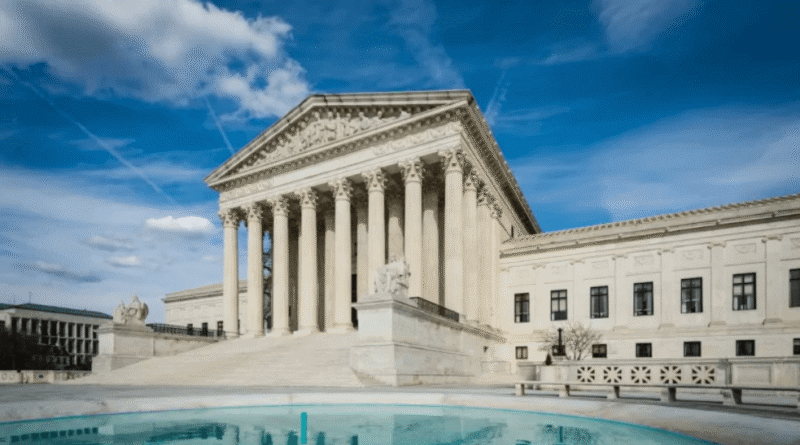
The EO further instructs the U.S. Attorney General and U.S. Secretary of Education to provide guidance within 120 days to ensure all federally funded educational institutions comply with the groundbreaking 2023 Supreme Court decision Students for Fair Admissions v. Harvard (SFFA), which banned racial discrimination in college admissions.
As a result of SFFA, if an educational institution treats anyone on campus differently based on race, that institution breaks the law. The SFFA decision also holds that institutions may not separate or segregate students based on race, or distribute benefits based on race.
President Trump’s March 26 EO strongly reinforces his earlier one of January 21, 2025, “Ending Illegal Discrimination and Restoring Merit-Based Opportunity.” The latter reprimanded the many American institutions perpetuating DEI and ordered federal executive departments and agencies “to terminate all discriminatory and illegal preferences.”
However, President Trump’s March 26 EO was attacked on April 20, 2026 by a coalition that filed a lawsuit defending on-campus programs whose activities “vary based on race.” The coalition includes the American Association of University Professors (AAUP), the National Association of Diversity Officers in Higher Education (NADOHE), and the United Academics of Maryland-University of Maryland, College Park.
It’s not the first time these organizations have flouted EOs. The AAUP and NADOHE also sued over two EOs that President Trump signed early in his second term. The first directed federal agencies to cancel racially biased grants and contracts “to the maximum extent allowed by law,” while the second required recipients of federal funding to “certify” that they don’t “violate any applicable Federal anti-discrimination laws.”
This left-wing litigation was rebuked in March 2025, when a three-judge panel of the 4th U.S. Circuit Court of Appeals stated that the lawsuits were unlikely to succeed against the EOs. Among other relevant findings, Judge Albert Diaz wrote for the majority that “certification” did, in fact, require evidence that “equity/DEI” programs were not violating anti-discrimination law.
The MAS maintains that, while too early to predict how the March 2026 EO will play out in court, these significant rulings reflect increasingly decisive and consistent national opposition to racial preferences.
“Many recent legal decisions underscore that racially discriminatory programs on campuses must give way to individual equal protection, as enshrined by the U.S. Constitution,” said the MAS. “President Trump’s March Executive Order is grounded on contemporary jurisprudence that rejects racialist preferences in everything from restaurant relief funds to federal contracting.”
Relatedly, MAS research conducted between 2023 and 2025 into campus DEI programs revealed extensive racial bias at all twelve campuses governed by the Maryland Board of Regents. These findings point to equal protection violations under the Fourteenth Amendment as well as threats to free speech under the First Amendment—both Amendments bind all public campuses.
MAS studies also support the finding in President Trump’s latest EO that many institutions refuse to end DEI programs and “often attempt to conceal their efforts to do so.” In 2025, the MAS revealed negligible efforts by public campuses in Maryland to comply with the mandates of SFFA and multiple executive orders.
“Universities want to justify ‘equity budgets,’ yet avoid accountability when these result in racially biased programs; that breaks the law,” the MAS maintains. “Students and faculty continue being placed into racialized ‘underrepresented’ or ‘overrepresented,’ ‘marginalized’ or ‘privileged’ pigeonholes without their permission. Campus administrators then allocate millions to policies that treat people differently based on some racial category a school claims they belong in.”
In addition to the legal jeopardy they create, preferential programs are widely rejected by academics, including many left-leaning ones. MAS cited a nationwide survey of 6,269 faculty on 55 campuses, which found majority support for institutional political neutrality as well as skepticism about whether DEI affirmations should be required in hiring. Even at prestigious colleges and universities where liberal faculty outnumber conservatives six to one, more than half the respondents opposed addressing “equity” during hiring. (Foundation for Individual Rights and Free Expression, “Silence in the Classroom,” 2024.)
While acknowledging the primacy of the SFFA decision, MAS also highlights other significant rulings reflecting a major shift in the federal judiciary. Since 2021, courts have dismantled many race- and minority-biased programs, revealing a growing legal consensus:
- Vitolo v. Guzman (2021): The Sixth Circuit found race-based priorities in Covid relief funding unconstitutional.
- Wynn v. Vilsack (2021): Five federal district courts struck down USDA loan forgiveness programs available only to minority farmers.
- Mid-America Milling Company v. U.S. DOT (2024): A federal district court rejected any “presumption” of social disadvantage based on race in federal contracting.
Fortunately, MAS adds, the Biden-Harris administration was “zero for nine” in defending racial preference programs in court, failing to appeal the defeats above. This suggests increasing recognition—even by Biden’s left-leaning Department of Justice—that race-driven programs are indefensible.
“Federal courts have concluded that the U.S. Constitutional standard is equal protection for individuals, not equity for groups,” MAS stressed. “We agree with Jim Simpson, head of the National Association of Minority Contractors (DMV Chapter), which just sued President Trump. Mr. Simpson recently stated that ‘Minority contractors have a proud, multi-generational legacy of proving [their] enormous value the old-fashioned way, through hard work and fair dealing.’”
“The MAS concurs, yet hastens to add that maintaining a proud legacy based on hard work and fairness has nothing to do with ‘minority’ status or the color of one’s skin. We urge that race and other incidental aspects of identity be ignored when evaluating professional and personal merit. As Chief Justice Roberts memorably put it in SFFA, ‘Eliminating racial discrimination means eliminating all of it.’”
The MAS therefore calls on state attorneys general (AGs) to clarify their legal positions regarding the requirements of President Trump’s March 26 EO. The MAS also cautions citizens and professional associations to remain vigilant in identifying and challenging discriminatory policies within state agencies, corporations, and academic institutions.
State AGs may indeed provide essential advice about new legal requirements or, conversely, attempt to defend racially biased programs. Whichever the case, AGs should be pressed to explain their legal positions and how they arrived at them.
Finally, citizens individually or through associations can prove invaluable by calling out illegal racial preferences—however disguised—and by serving as plaintiffs when appropriate.
The Maryland Association of Scholars (MAS) is an affiliate of the National Association of Scholars (NAS), a network of scholars and citizens committed to academic freedom, disinterested scholarship, and excellence in American higher education.
###